Help your child understand homework
Share your child’s homework. We’ll show you exactly what to say, what to ask, and how to guide them — without giving away the answer.

See what Homework Together whispers in your ear.
For every exercise, you get the exact lines to say, the questions to ask, and how to respond when your child speaks — never the answer itself.
- What to say to open the topic
- The right question to ask next
- How to reply to their answer
- A visual to draw together
How to compare two fractions by looking at the size of the slices, not just the number of pieces.
"Imagine we have two pizzas, cut differently…"
"Which pizza do you think gives us more to eat?"
"The one with more slices" — gently ask if 8 tiny slices could still be less than 4 big ones.
"It depends on the size" — celebrate and move to drawing the two pizzas.
Draw two pizzas: one cut in 2, one cut in 4. Ask which slice they'd rather have.
Which is bigger: 1/2 or 3/8?
Guide them to draw it — don't reveal the answer.
A calm way to help, in three steps.
You don't need to remember the lesson. You just need a phone and a minute.
Snap the homework
Take a photo, upload an image or drop a file. Handwritten or printed — both work.
See what's really being taught
You'll get the subject, school level and the concept your child is learning, written in plain language.
Guide your child, step by step
Progressive hints, worked examples and things to say when your child is stuck.
Everything you need to explain it well.
Each homework is turned into a small teaching plan — written for you, in the tone of a patient private tutor sitting next to you at the kitchen table.
What your child is learning
A one-paragraph summary of the lesson, written for you — no jargon, no lecture.
Simple words you can repeat
Everyday-language explanations you can say out loud, even if you don't remember the lesson.
Never spoil the answer
Three progressive hints before the worked solution. Your child stays in the driver's seat.
A similar exercise, solved
Every step explained clearly so you can walk your child through the reasoning.
What to watch for
The typical slips children make on this topic — and gentle ways to steer around them.
Keep the momentum
A fresh exercise and a short quiz to check understanding — with explanations after each answer.
From first fractions to first essays.
Whether it's a Grade 2 reading exercise or a Grade 8 geography map, the explanation is tuned to your child's level.
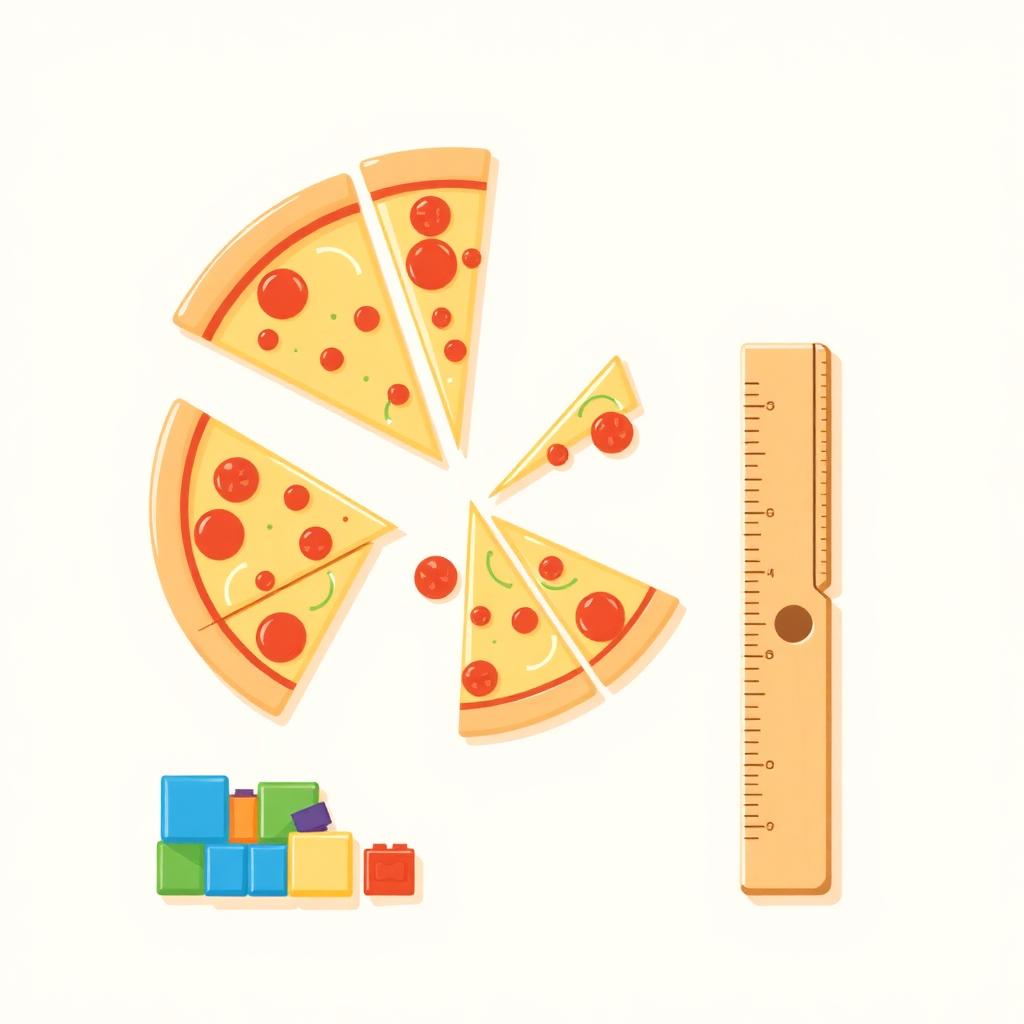
Explain with what you already have at home.
Every lesson comes with practical ways to teach the concept using everyday objects — because a pizza is often a better teacher than a textbook.
- Pizza slices for fractions
- Coins for decimals and change
- Lego bricks for counting and grouping
- A ruler for measurements
When one explanation isn't enough.
Children learn differently. If your child still doesn't get it, try another angle — simpler words, a new example, or a different way of framing the same idea.
The homework moment, transformed.
Real reactions from parents using Homework Together with their children.
“I finally knew what to say when my son got stuck on fractions. In five minutes he understood — and I did too.”
“Homework used to end in tears. Now I have the exact questions to ask so he thinks it through himself.”
“It doesn't hand out answers, it hands me a script. That's exactly what I needed as a parent.”
You don't have to remember the lesson.
We'll coach you through it.
Snap a photo. Follow the coaching plan. Homework time becomes calmer for both of you.